


Quick answer: On a weight-based interstate move, the mover weighs the empty truck and the loaded truck on a certified scale, and your shipment’s weight is the difference. You have the right to watch every weighing, to receive signed weight tickets with your bill, and to demand a reweigh before unloading if the truck was weighed at origin.
Weight matters because it sets the price on most non-binding estimates. These rules are federal and apply to every interstate household goods carrier: 49 CFR 375.507 to 375.521. Weighing scams, where a truck is weighed with extra fuel, people or equipment on board, are exactly what these rules were written to stop.
Last updated: October 23, 2026
When does an interstate mover have to weigh your shipment?
Whenever the price depends on weight. Under 49 CFR 375.507, a mover moving you on a weight-based non-binding estimate must weigh the shipment on a certified scale before charging you. If the estimate was based on volume (cubic feet) and is later converted to weight, the mover must give you a written explanation of the conversion formula. On a binding estimate, the price doesn’t change with weight, so the scale only matters if you have a binding not-to-exceed estimate and want the lower price. Our guide to binding vs. non-binding estimates explains the difference.
How do movers weigh a shipment?
There are two approved methods in 49 CFR 375.509, plus an option for small loads.
| Method | How it works | When it’s used |
|---|---|---|
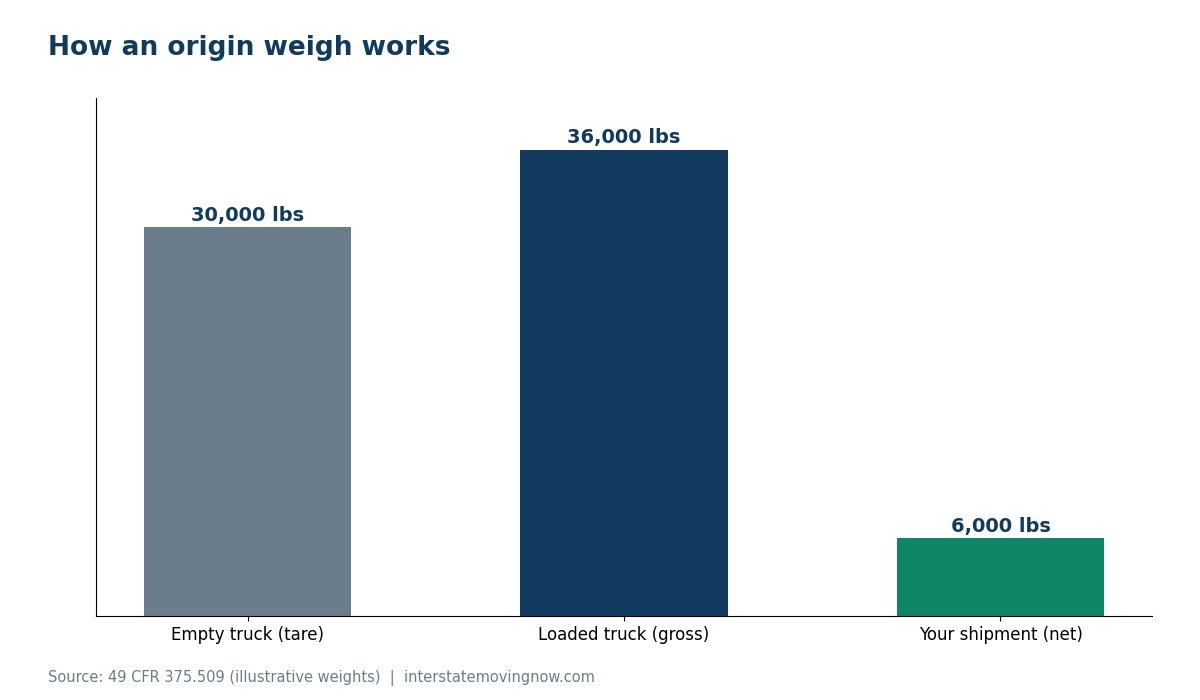
| Origin weigh | Empty truck (tare) weighed before loading, loaded truck (gross) weighed after; net = gross − tare | Most common; lets you see the weight before delivery |
| Back weigh | Loaded truck weighed before unloading, empty truck after; net = gross − tare | When weighing at destination is easier |
| Platform scale | Goods weighed directly on a certified platform or warehouse scale | Shipments of 3,000 lbs or less (49 CFR 375.511) |
| Containers | Net weight of the loaded container minus the empty container with its pads and bracing | Container and storage-vault moves |
Three conditions apply to both weighings: the truck must carry the same pads, dollies, ramps and equipment each time; the driver and everyone else must be off the vehicle; and the fuel tanks must be full at each weighing, or, on an origin weigh, the mover must not add fuel between the empty and loaded weighings. A trailer can be weighed alone if the scale is long enough to hold the whole trailer.
What should a weight ticket show?
Each weighing needs its own ticket, signed by the weighmaster, under 49 CFR 375.519. If both weighings happen on the same scale, one ticket can record both. Every ticket must list six things:
- The name and location of the scale.
- The date of each weighing.
- Which entry is tare, gross or net weight.
- The company or carrier ID of the vehicle.
- Your last name as it appears on the bill of lading.
- The carrier’s shipment registration or bill of lading number.
The mover must attach true copies of all weight tickets to any bill that depends on weight. No tickets, no weight-based charges. Check that the dates make sense: a tare weighing dated days before your pickup, or a gross weighing at a scale far off the route, is worth questioning.
Can you watch the weighing or ask for a reweigh?
Yes to both. 49 CFR 375.513 gives you, or whoever pays the bill, the right to observe every weighing, and the mover must tell you where and when it will happen. If you don’t show up, you’re presumed to have waived that right for the first weighing; for a reweigh, the waiver has to be in writing, under section 375.515.
On an origin-weighed shipment, 49 CFR 375.517 lets you demand a reweigh after the mover tells you the billing weight and charges and before unloading starts. The mover must then bill on the reweigh weight. If you want to know the actual weight and charges in advance, ask: under section 375.521, the mover must notify you at least one full business day before delivery if you request it and give a phone number or address.
How do you know if your shipment weight is too high?
Compare the billed weight with a realistic range for your home. Military relocation offices use simple rules of thumb: the Naval Postgraduate School’s personal property office suggests about 1,000 pounds per room, excluding bathrooms, plus large appliances and whatever is in the garage, basement or storage. By that rule, a two-bedroom apartment with a living room and kitchen starts around 4,000 pounds before appliances and storage, and heavily furnished homes or large book collections run well above it. Treat that as a sanity check, not a rule. Our moving cost by home size report shows typical prices for each size.
A big jump between the estimated weight and the billed weight is the signal to act. If the weigh happened at origin, demand the reweigh before unloading. Pay what you must at delivery to get your goods (no more than 110% of a non-binding estimate), keep the tickets, and dispute the rest in writing or through the mover’s arbitration program, which you can read about in our guide to filing a claim with an interstate mover.
FAQ
Do I have to pay for a reweigh?
Federal rules give you the right to demand a reweigh on an origin-weighed shipment before unloading, and the bill must use the reweigh weight. Some tariffs charge for a reweigh when the result is close to the original, so ask the mover about its reweigh policy in advance.
Can a mover estimate by cubic feet instead of weight?
Yes, but if a volume estimate is converted to a weight-based price, the mover must explain the conversion formula to you in writing. Final charges on a non-binding estimate still follow actual weight and the 110% rule.
Does a binding estimate require weighing?
No. A binding estimate fixes the price for the listed items whatever they weigh. Weighing only changes your bill on a non-binding estimate or on a binding not-to-exceed estimate, where a lighter shipment can lower the price.
What is tare weight in moving?
Tare weight is the weight of the empty truck or container, with the equipment needed for the move. Your shipment’s net weight is the loaded (gross) weight minus the tare weight.








No Comments